The rise of Sit-to-Stand Desks: Why UK workplaces are standing up to change
Posted on 10 April 2026
Walk into a modern office today and you’ll notice something different. Not immediately, perhaps. But give it a moment and it becomes clear… people are moving more.
Desks are no longer fixed like back in the day, they rise, they fall, they adapt. And in doing so, they’re quietly changing the way we work.
Over the past 12–24 months, the uptake of electric sit-to-stand desks across the UK has accelerated. It’s not a trend driven by aesthetics alone, or even by the shift to hybrid working, it’s a response to something more fundamental: the way prolonged sitting has come under scrutiny.
Recent UK research shows that office workers can spend up to 67 days a year sitting, with many remaining sedentary for over 70% of their working day. It’s a statistic that’s hard to ignore, particularly as businesses place more emphasis on employee wellbeing, retention and performance.
This means the conversation has shifted from having a desk to what that desk allows you to do.
A small change that makes a noticeable difference
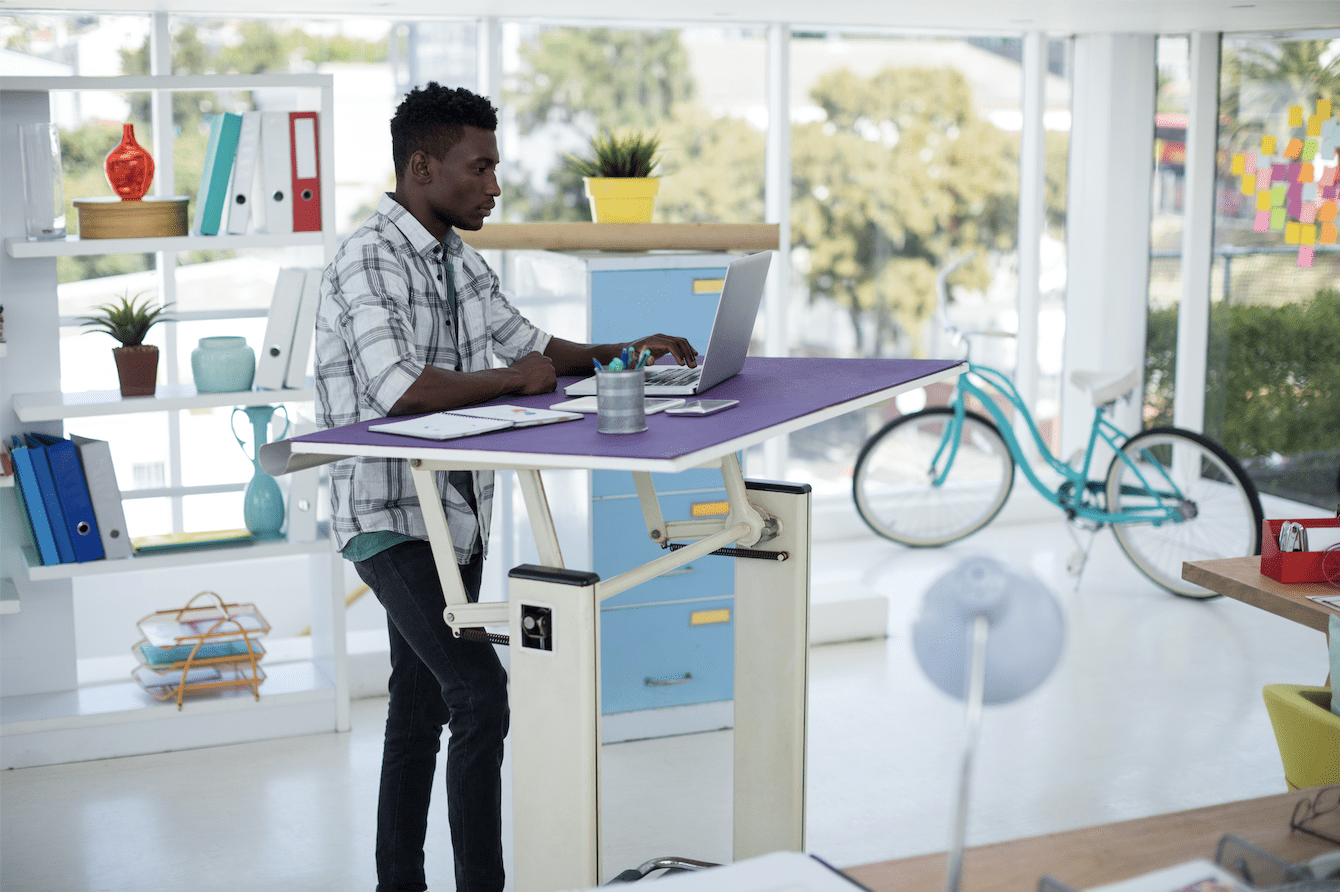
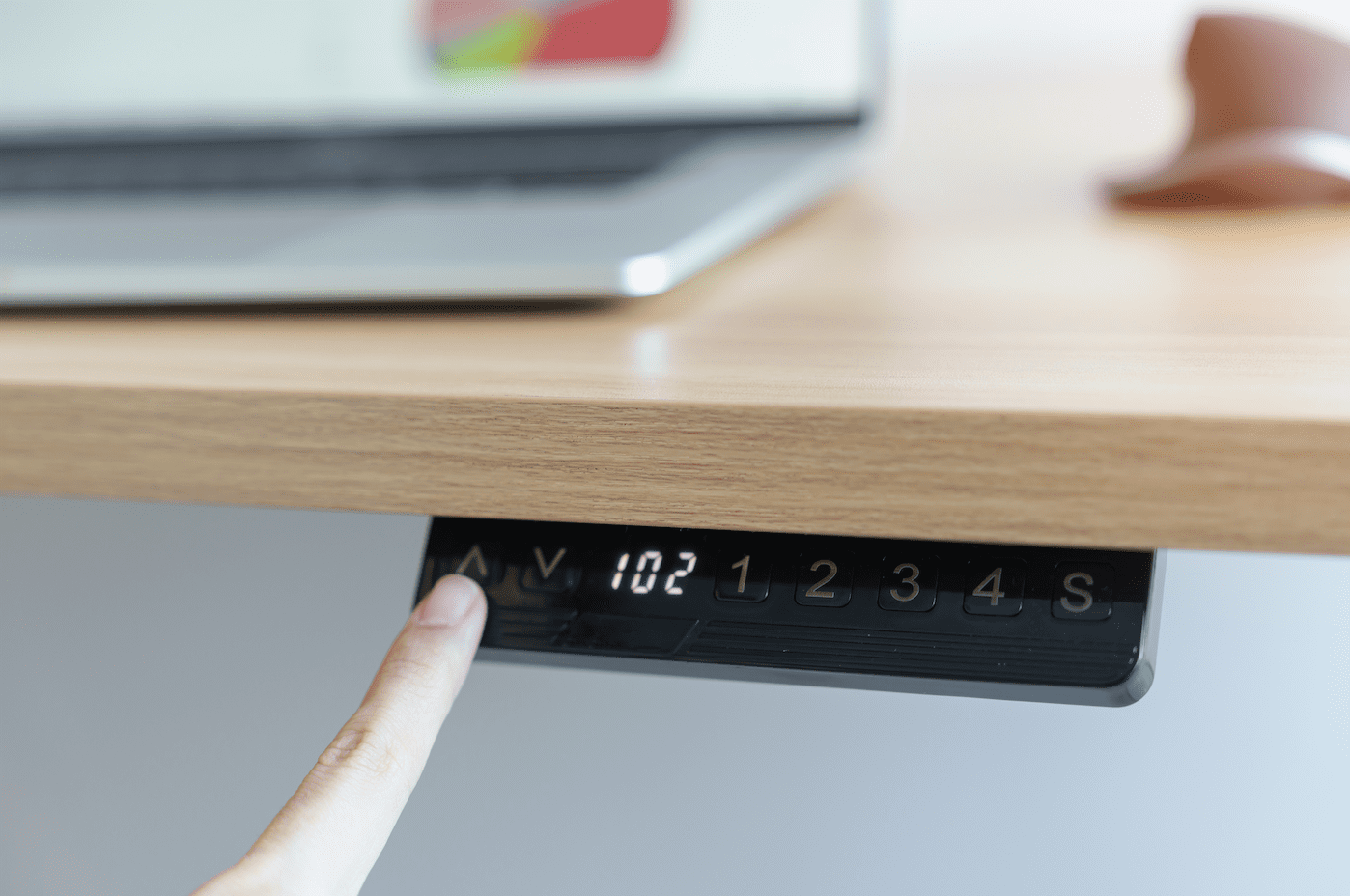
There’s something deceptively simple about a height-adjustable desk. At the press of a button, the working day changes pace. Standing for part of the day encourages movement. It breaks up long periods of stillness and it can help reduce that mid-afternoon slump that so many people recognise but rarely question. Studies have shown that sit-to-stand desks can reduce sitting time by over an hour per day, without impacting productivity and in many cases, improving it.
But beyond the data, there’s a more human benefit where people simply feel better: less rigid, less fatigued, more in control of their environment. And that sense of control — however small — has a knock-on effect on focus, mood and engagement.
Function meets form
What’s interesting is how quickly these desks have moved from being a purely functional solution to a design feature in their own right. Early versions were often bulky or utilitarian but that’s no longer the case.
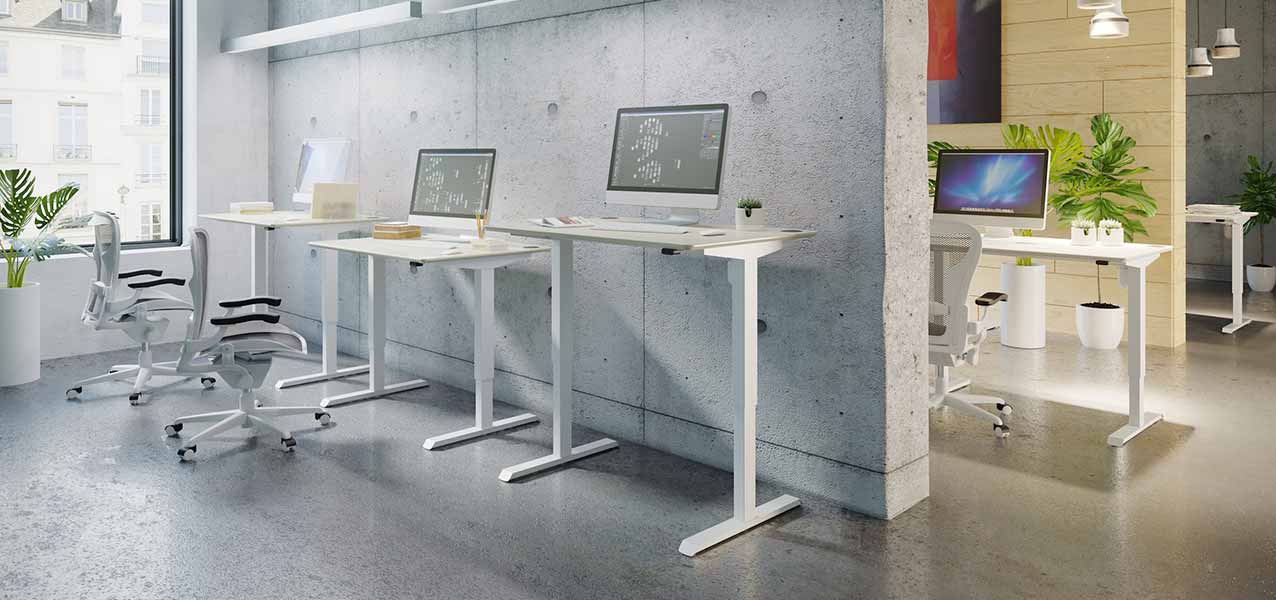
Today’s electric desks are sleek, minimal and quietly impressive. Clean lines, integrated cable management, refined finishes. They sit comfortably within contemporary office schemes, complementing everything from open-plan environments to more structured layouts, elevating layouts and feeling natural within them.
And when paired with thoughtful zoning, breakout areas and acoustic solutions, they become part of a wider story: a workplace that feels considered, responsive and built around the people using it.
Why businesses are paying attention
For many organisations, introducing sit-to-stand desks comes from a wider shift in thinking. It’s part of recognising that the way people work has changed, and that the workplace needs to keep up.
There’s a growing awareness around wellbeing, but also around how much the environment shapes focus, energy and day-to-day experience. Giving people the ability to move throughout the day plays into that in a very practical way.
As business leaders know, teams aren’t one-size-fits-all anymore, with different roles, different routines, and different needs. What works perfectly for one person can feel restrictive to another, and fixed setups don’t always leave much room for that.
Adding flexibility into the workspace, even in simple ways tends to make a noticeable difference over time.
Where Sygnus comes in
Of course, choosing the right desk is only part of the picture.
Fit, finish, functionality, integration with your wider space… these details make the difference between something that simply exists and something that genuinely improves how a workplace performs.
At Sygnus Office Partnership, sit-to-stand desks are treated as part of a broader conversation about how your workspace supports your team.
With over 30 years of experience, Sygnus works closely with businesses to understand how people use their environment, recommending solutions that feel right on paper and in practice. From individual workstations to full office fit-outs, the focus is always the same: creating spaces that work harder for the people in them.
A change worth making
The growing use of sit-to-stand desks reflects a broader change in what people expect from their working environment, as comfort matters more. So does energy, focus, and the general feel of the space people spend most of their day in. There’s a clear shift towards workplaces that adapt more easily to the individual, rather than expecting everyone to fit into the same setup. Often, it’s the smaller adjustments that have the biggest impact over time.
If your workspace hasn’t been revisited in a while, this is a simple, effective place to begin.
Ready to make the move?
If you’re considering introducing electric sit-to-stand desks, or simply want to explore how your workspace could better support your team then now is the time to act.
Talk to Sygnus Office Partnership today and discover how the right furniture can transform the way your people work, feel and perform.
Tagged as: